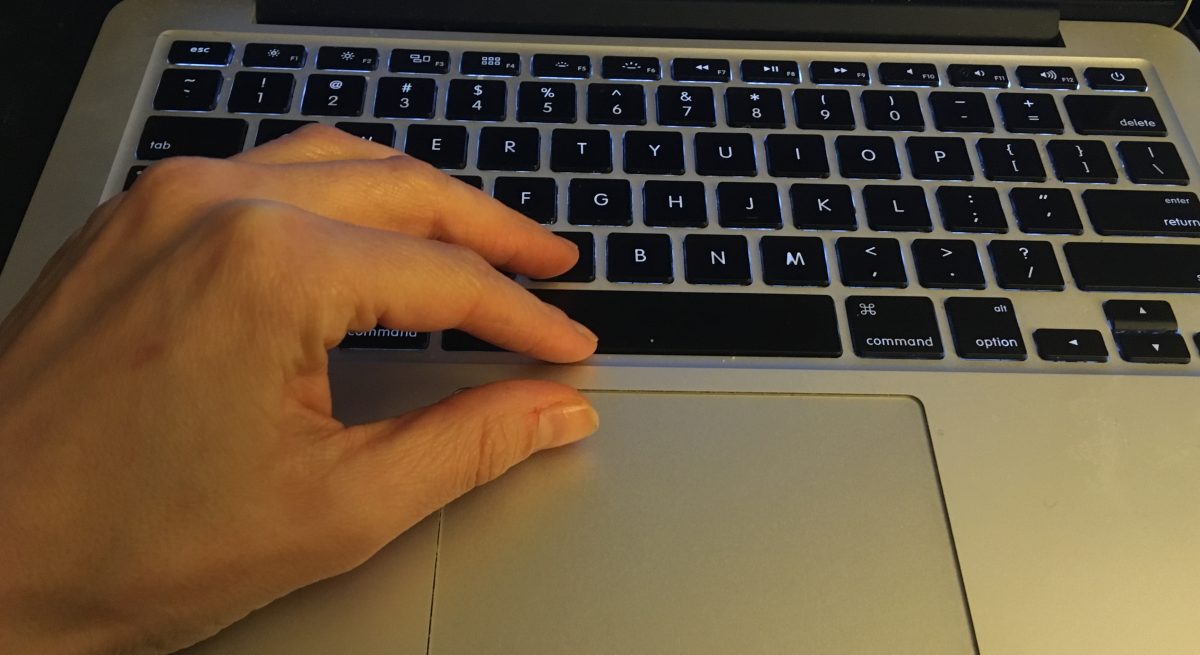
When I was a kid, we had a Commodore PET computer in my elementary school library. As rewards during class, we would sometimes be given time to go down to the library and play on the computer. I remember a game that let you advance by naming state capitals. There was another game that let you make decisions to find your way out of rooms. There were no graphics. It was typing. It was floppy discs. I remember in high school we had computers that were set up for word processing in a computer lab connected to a dot matrix printer that made that distinctive sound as it printed out from its connected sheets. I admit that I never imagined that so much of my life would eventually come to depend on the computer interface.
Len Manovich writes in the intro to “The Interface” and in “Software Takes Command” how we must consider the interface when we think about web art and, really, the web in general. Now with a variety of browsers and add on extensions, there are multitudes of ways we can view content. We don’t even really have to see content in the way the designer has planned if we don’t want to on our web servers. Artists can use and develop extensions to create the art work that they want and to enhance either a viewer’s experience or be part of the spectacle itself. Not only that, but the computer itself provides a different experience depending on the system it uses.
My experience as a computer user has changed drastically in the past decades as my experience with different computers and different interfaces has evolved. I’ve always been a Mac lover and don’t enjoy using a PC as much. However I prefer the Android interface to the Apple OS when it comes to tablets and phones. When Windows makes a big change to its system people either rant or rave. I’ve cursed out loud at the realization that upgrading to a new OS has left old software I loved unusable. It is a bit of science fiction when you think about it and the fact that AI is being used to write commercial and to interact with users. We are heading into “Blade Runner” category.
In my house we have all types of computers. We have old and new laptops. We have old and new desktops. I still keep my old Mac G5 as a back up. We know that the need to run new and better software requires a new and better machine. I’ve heard say that the second you buy a computer, its already obsolete because there’s already something better developed somewhere. But there is a commonality. Manovich discusses the idea of “remediation.” It’s a constant building of what came before. Keeping what works and what we are comfortable with and making it better. We are used to seeing things a certain way and working with things a certain way. Change is good but then I remember how I felt when Apple did away with the Final Cut 7… “media after software” indeed.
Eventually, I think things will continue to evolve. Ebooks don’t look like paper books anymore. I agree with the thought that its an evolution. It may only seem slow because we are spoiled by how fast the whole computer revolution has been overall but just in my lifetime I’ve seen it change completely.
 Alina Learns to Code